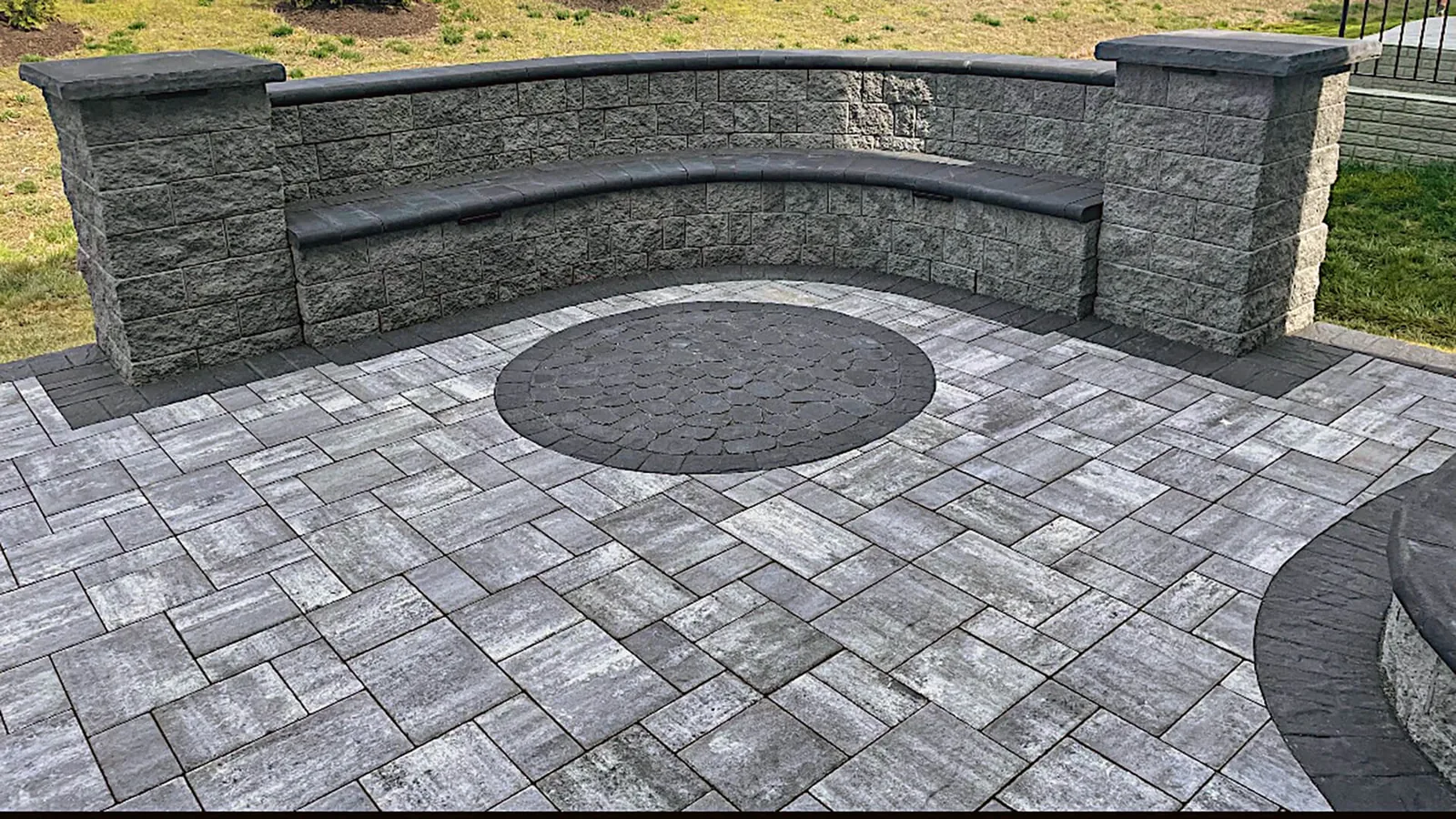
Outdoor Kitchens
Plan an outdoor kitchen around how you cook, entertain, store essentials, and move between the house, patio, dining, and gathering areas.

Northern New Jersey
Add a fire pit and gathering area sized and positioned for your backyard layout, seating plan, materials, and fuel choice.
A fire pit is most successful when the feature, seating, and paths are designed as one space. Diameter, seat distance, nearby structures, vegetation, and traffic through the yard influence placement.
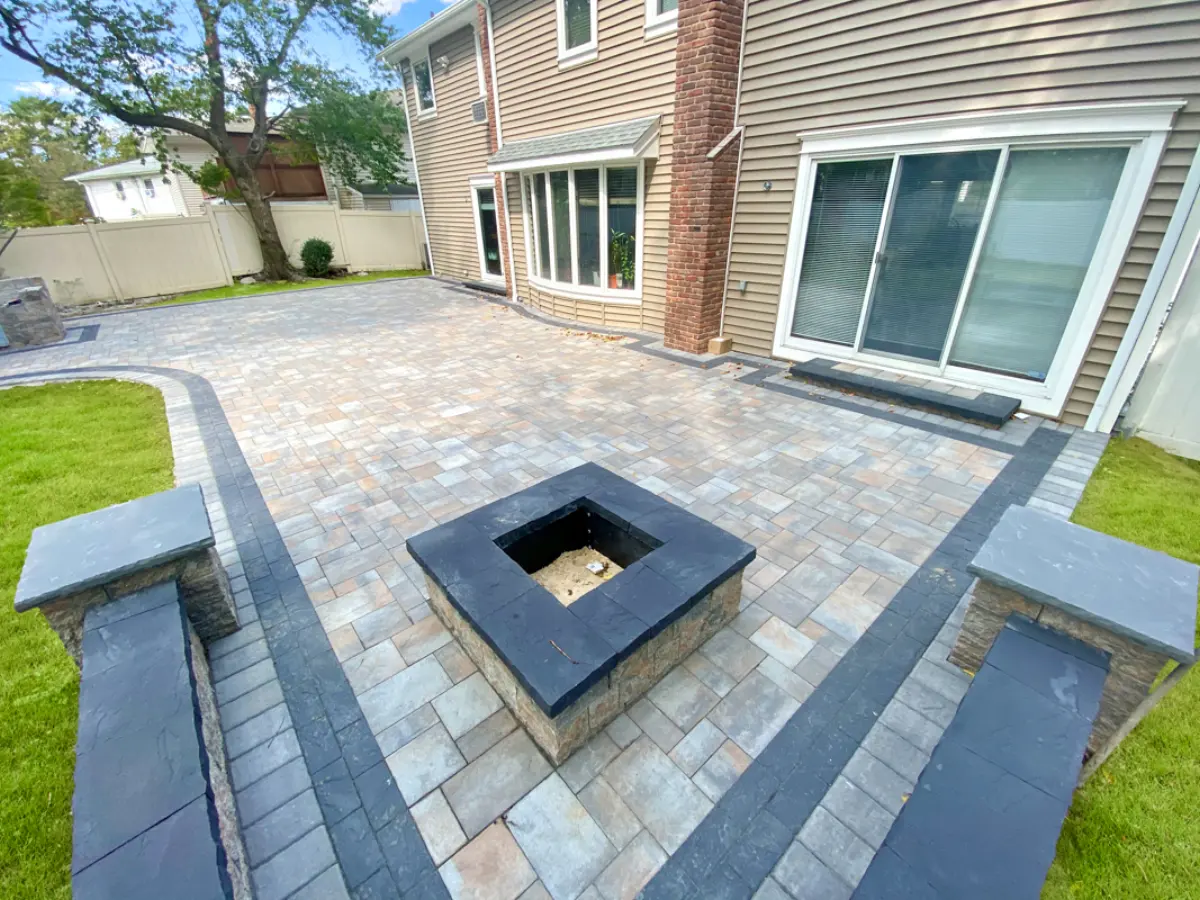
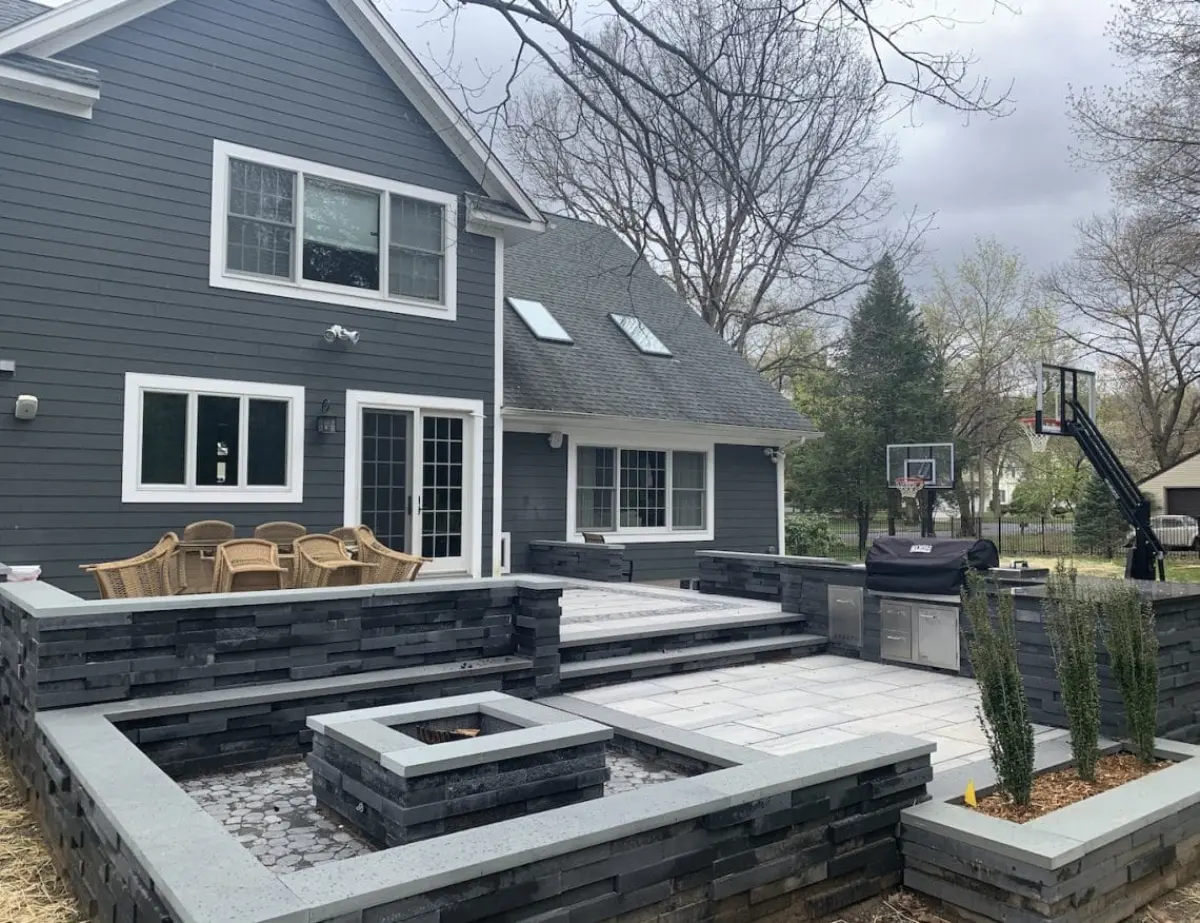
Fuel choice affects the feature, controls, utility coordination, and daily use. Product instructions, clearances, applicable requirements, and site conditions must be addressed.
Wall block, veneer, caps, and paving can coordinate with the home. Heat exposure and the selected fire system affect appropriate products. Keep the area clear and follow manufacturer guidance.
A fire pit for a few chairs has different space needs from a larger gathering circle with built-in seating. We consider the distance between the flame and seating, the route around the group, and how the area connects to dining or the house. Placement also needs to respect nearby vegetation, structures, and the requirements of the chosen fire system.
Wood-burning and gas fire pits have different operating and installation considerations. A gas feature requires utility planning and access to controls; a wood-burning feature needs a practical ash-handling plan. Heat-rated components and manufacturer instructions guide material choices. We discuss the intended fuel before finalizing the masonry dimensions and surrounding patio.
A fire pit works best when the surrounding area is inviting even when there is no fire. Consider where people will sit, what they can see, and whether the space feels connected to the rest of the yard. A pit placed at the edge of a patio may free up circulation; a separate destination can create a more intimate seating area. Each choice changes the amount of paving, lighting, and pathway work needed.
We also think about prevailing wind, overhanging branches, nearby structures, and the distance to property lines. The appropriate location depends on the selected fire system and applicable local rules. We review those factors before promising a particular size or placement.
Wood-burning fires offer a traditional experience but require firewood storage, tending, ash removal, and attention to smoke. A gas feature can be quicker to operate and easier to control, but it requires a fuel supply, accessible shutoff, and equipment selected for the installation. Neither option is universally better; the decision should match how often and how spontaneously you expect to use the feature.
Fuel choice affects masonry dimensions and the components that contact heat. Confirm the insert or burner requirements before building the surround. Local rules can vary, so the proposed installation should be reviewed for its site and fuel type rather than relying on a generic backyard plan.
Chair size, legroom, and the space needed to walk behind seated guests determine how large the gathering area must be. Built-in seat walls can define the edge and reduce loose furniture, but they fix the seating distance and orientation. Movable chairs give flexibility for different group sizes and weather conditions. We can discuss which arrangement suits the patio and household.
A path should lead into the area without forcing people to cross directly between the fire and seated guests. If children or pets use the yard, think about visibility and how the fire area is approached. Safety clearances follow the equipment and local requirements, not a decorative drawing.
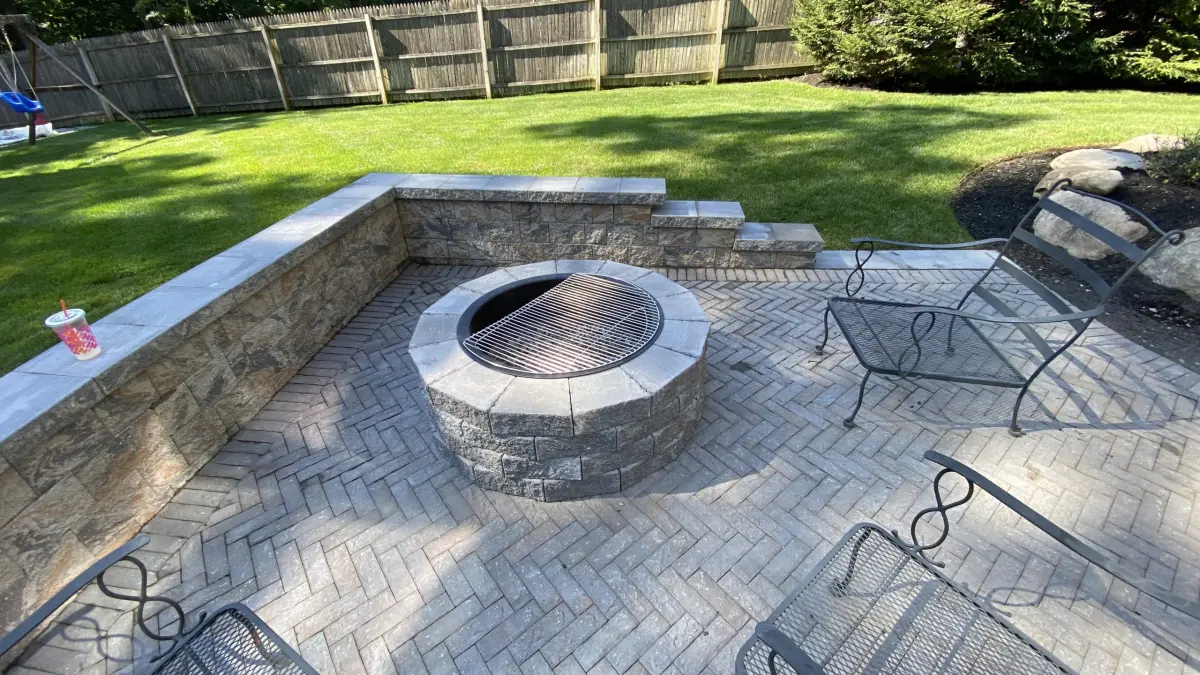
The visible wall block, stone, or veneer is only part of a fire pit. Components near the flame must be appropriate for heat, and the chosen fire system should be installed according to its instructions. The base, drainage, and joint details also have to withstand outdoor conditions. Ordinary patio materials may be suitable nearby but not necessarily inside the hottest part of the feature.
We coordinate the pit finish with surrounding pavers without forcing an exact color match. A restrained material palette can make the gathering area feel connected to the home. We also discuss how ash, soot, spills, and weathering may affect the selected surfaces over time.
If you already have a patio, we assess whether it has space for both a fire feature and comfortable circulation. The existing base may not be suitable for a built-in feature, and a gas line may require access beneath the paving. A separate fire pit area can be a better fit when the main patio is reserved for dining or when views and wind favor another location.
For a new patio, we plan the fire feature early. That allows the shape, joints, edges, and any utilities to be coordinated. Adding it after the patio is complete can still be possible, but options may be narrower and finished work may need to be opened.
Before use, follow the selected product instructions and any local fire restrictions. Keep vegetation and combustible items clear, use the controls as designed, and allow materials to cool before cleaning. Wood-burning features need a safe plan for ashes; gas equipment may need periodic inspection and seasonal care.
For an estimate, tell us the preferred fuel, typical group size, whether you want movable chairs or seat walls, and where people already gather in the yard. A good proposal should define the feature, surrounding paving, utility coordination, drainage, and any location or approval questions that remain.
A fire pit is often suited to a circular or flexible gathering arrangement. People can sit around it, and the feature usually has a lower profile in the yard. An outdoor fireplace creates a directional focal point and more architectural presence. It can anchor a patio wall or outdoor room, but it occupies more vertical and ground space and has different construction requirements.
Consider how your household gathers. If everyone wants to face each other and move chairs, a fire pit may fit naturally. If you want a defined lounge facing one feature, a fireplace may serve that goal better. Wind, fuel, clearances, available patio area, and budget also influence the choice. We can discuss both during planning and help identify what the site can accommodate.
Neither feature needs to be the center of every outdoor project. In some yards, better seating and lighting will make the space more usable before any fire feature is added.
A built-in fire pit can be integrated into a new patio or placed in a separate paved circle. Integration keeps the space connected to dining and the house; separation can create a quiet destination and leave the main patio free for other uses. The choice depends on how people move through the yard, where wind carries smoke, and whether the property offers enough room for clearances and seating.
We look at edges and transitions. If the fire area is raised or reached by steps, those changes should be obvious after dark. If it sits in a lawn, a durable path can reduce muddy foot traffic. Lighting should guide people to the area without making the flame difficult to see. The paved surface should also have a plan for rainwater so the seating circle does not become a low spot.
The fire feature may be only one part of the project. A comfortable result can require paving, a suitable base, utility work, seat walls, lighting, or a path from the house. It is useful to separate these items in a proposal so you can decide what to build now and what can follow later. A small pit surrounded by insufficient seating space may cost less initially but fail the intended purpose.
Discuss how the fuel system, heat-rated components, and finish materials are specified. Ask which parts are included and who handles any utility coordination. If an existing patio will be altered, clarify how new and old surfaces will meet and whether matching materials are available.
To decide whether to phase the project, identify the work that would be disruptive to add later. A fuel line, support under a built-in feature, or a change in patio grade may be easier to plan with the initial paving. Movable seating and some landscape details can usually be chosen later. We discuss the sequence so the first phase remains useful on its own, including safe access and practical seating.
More ways to improve your outdoor space
Plan an outdoor kitchen around how you cook, entertain, store essentials, and move between the house, patio, dining, and gathering areas.
Create a poolside patio with thoughtful circulation, drainage, material transitions, gathering zones, and room to relax.
Build an outdoor fireplace as an architectural focal point coordinated with the patio, seating, views, materials, and backyard circulation.
Verified service areas
Planning a patio, retaining wall, steps, or outdoor living space in Randolph? Explore our masonry services and see examples of work we have completed in New Jersey.
Explore patios, walkways, masonry steps, retaining walls, and outdoor living work for Denville homes, with examples from our New Jersey portfolio.
Consider masonry and outdoor living improvements in Parsippany–Troy Hills, from paver patios and entry steps to driveways and retaining walls.
Explore masonry and outdoor living services for Montclair homes, including Upper Montclair and neighborhoods across the township.
Plan retaining walls, paver patios, walkways, and masonry steps for homes in Chatham Township and Chatham Borough.
Retaining walls, paver patios, steps, and outdoor living for Montville Township homes, including Pine Brook and Towaco.
Paver patios, paver driveways, walkways, and outdoor living spaces for Short Hills homes in Millburn Township.
Retaining walls, stone patios, walkways, and driveways for Bernardsville properties, planned around slopes, drainage, and existing stonework.
Walkways, stone steps, patios, and retaining walls for homes in Mendham Borough and Mendham Township.
Masonry and outdoor living for Chester Township and Chester Borough homes, from patios and retaining walls to steps, driveways, and fire features.
Let’s get your project started
Tell us what you have in mind and where you’re located. Start your free estimate request right here.
Prefer to talk?
(973) 400-9480 ↗
A few details are all you need to get started. Fields marked * are required.